MeritBoard Merits and attendance for coaches, without the binder.
- Year
- 2026
- Type
- Apps
- Role
- Design, development
- Built with
- SwiftUI, SwiftData, Cloudflare Workers, D1
- Status
- Live App Store ↗
Coaches track a lot: who earned merits, who picked up demerits, who missed practice and why. Most of it lives in a binder or a spreadsheet that never seems to be where you need it. “Paper forms get lost. Spreadsheets aren’t available during practice.”
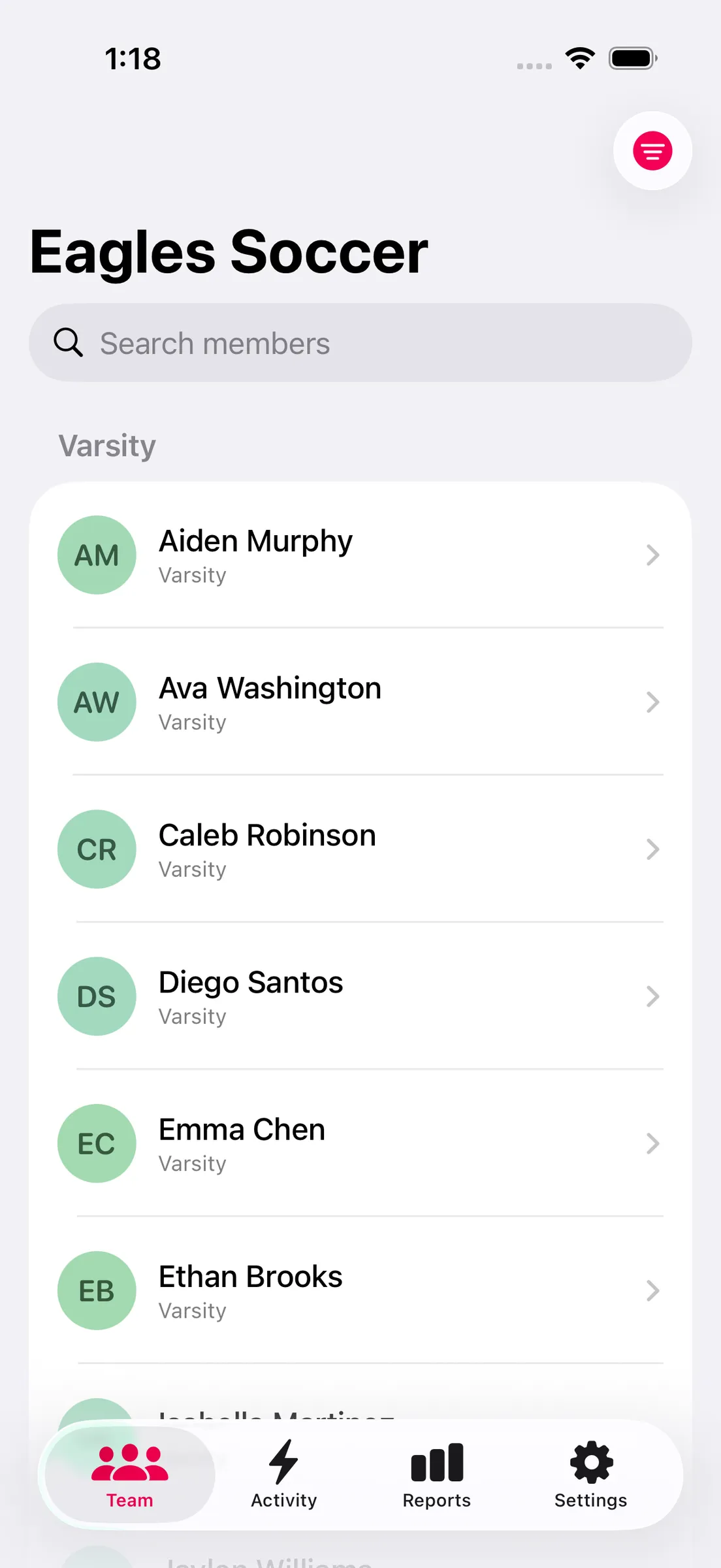
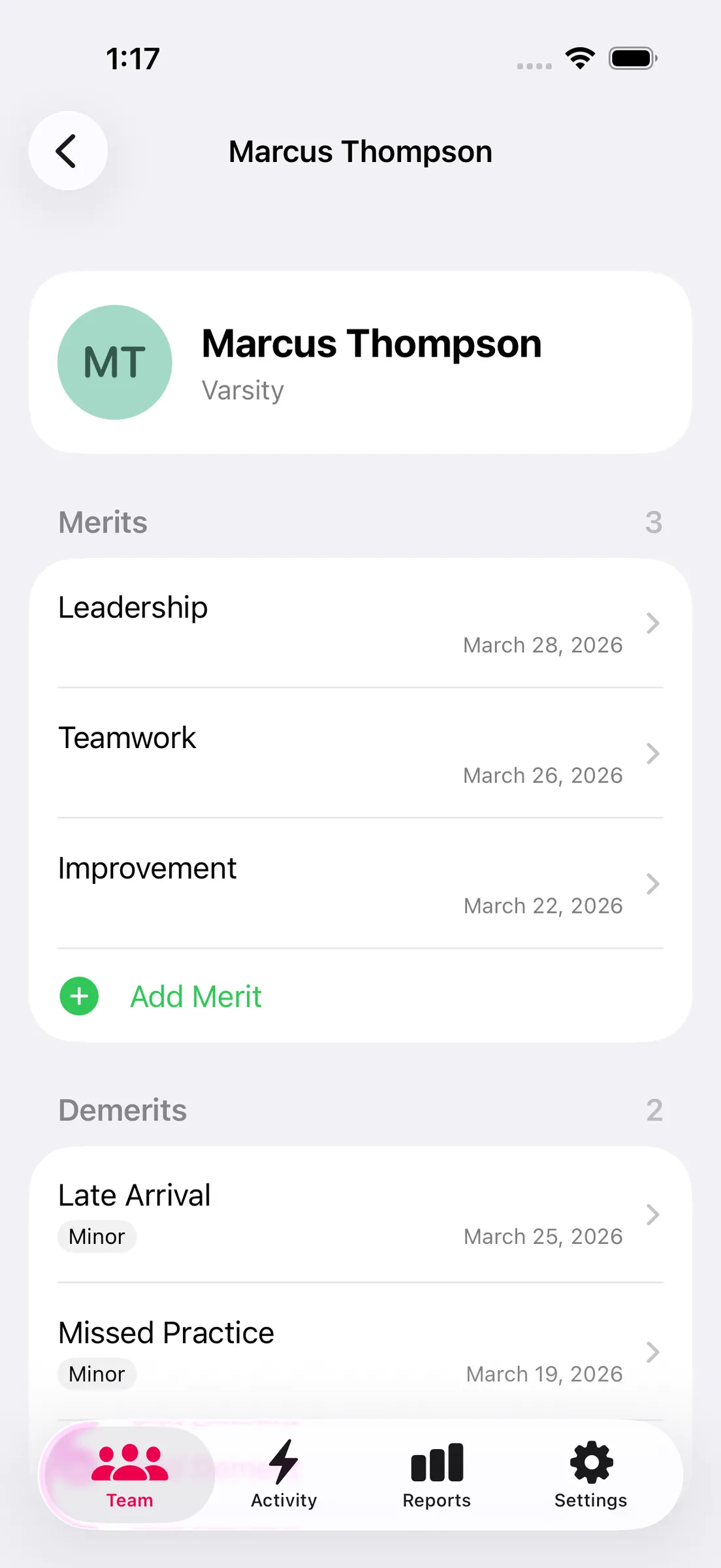
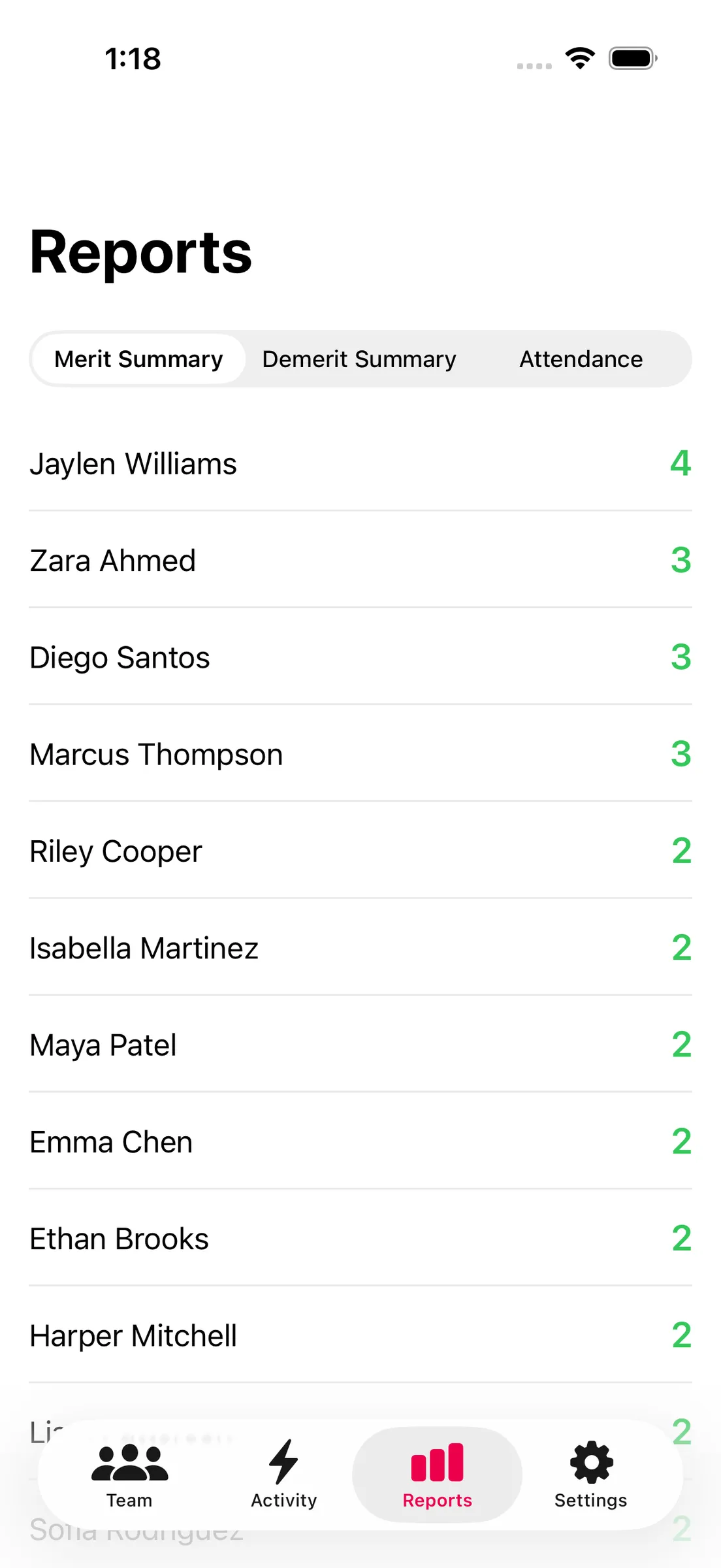
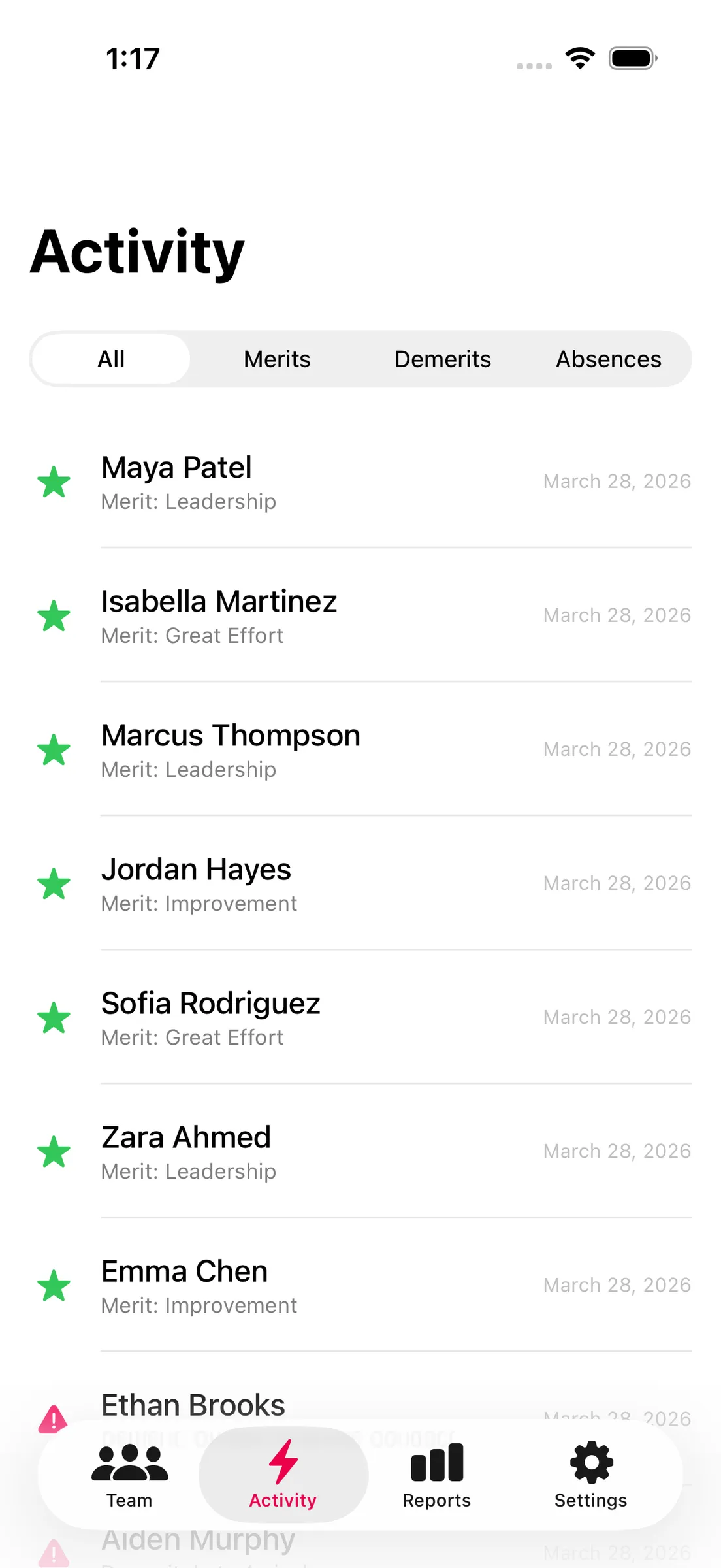
MeritBoard puts all of it on the coach’s phone. One tap records a merit or demerit, with custom types for each program. Attendance is logged by date, excused or unexcused, with reasons you configure. Co-coaches join with an invite code and see changes in real time, and administrators get reports and CSV exports. Rosters import from a spreadsheet template.
It works offline first, so a gym with no signal doesn’t matter; records sync when the phone reconnects. It’s free, and you don’t need an account to start. Sign in with Apple only comes in when you want to share a team.
Product page: toddanglin.github.io/meritboard
Backstory
I created MeritBoard first and foremost for my wife and her co-coach. They coach junior high cheerleading, and they wanted a better system for dealing with merit/demerit/attendance tracking. As a result, the app needed to be easy to use, focused on its primary task, offline by default, BUT (critically) capable of supporting multi-user syncing.
The biggest challenge with this app was the syncing and multi-coach support. Supporting those features added a long tail of work: support for inviting co-coaches, support for transferring team ownership, support for offline sync conflicts, and much more.
What I remember most about building this app is that I did most of it from my phone while traveling in London with my wife. I would drive the app’s development from GitHub Issues that GitHub Copilot would implement. I would get updated TestFlight builds from the GitHub Action, validate the changes on my device, then push updates to prod. It was an early, revealing experience for how AI coding agents could enable development workflows previously unimaginable.